📰 News & Activities
Welcome to the News & Activities section of the Climate Smart Agriculture (CSA) project.
Here, you can follow the latest updates, international training events, and local dissemination activities carried out by our partners from France, Germany, Turkey, and Bulgaria.
This section highlights how our consortium works together to integrate climate-smart practices into vocational education, strengthen teachers’ competences, and promote sustainable solutions for the agricultural sector. From transnational meetings and workshops to field visits, community engagement, and digital content creation — each activity reflects our shared mission to prepare the next generation of farmers and educators for a climate-resilient future.
Stay tuned for our regular updates, photo stories, and event reports as we document the progress and real-world impact of the CSA project across Europe.
01


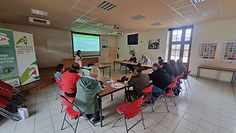


“From Ocean to Farm”: First International Training Held in Lesneven, France
9–13 June 2025 | Lesneven, France
The Climate Smart Agriculture (CSA) project officially launched its first international activity in Lesneven, France, hosted by MFR Lesneven, the project coordinator. The training, titled “Cultivating Climate Resilience: From Ocean to Farm,” brought together 16 participants — teachers and trainers from France, Germany, Turkey, and Bulgaria — for a week of hands-on learning, study visits, and international exchange on sustainable agricultural practices.
Throughout the five-day program, participants explored how climate change affects ecosystems from the ocean to the farm, and how modern agricultural education can respond. The sessions combined expert lectures, field demonstrations, and institutional visits that highlighted innovative climate-smart solutions such as biogas production, agroforestry systems, carbon-friendly farming, and water-efficient technologies.
Key visits included local farms applying low-carbon techniques, the Lycée Agricole du Nivot, and Iréo Bretagne facilities, where participants discussed the integration of Climate Smart Agriculture into VET curricula. Interactive workshops focused on AI and Agriculture 4.0, soil carbon management, and education for sustainability, helping teachers design new learning modules for their students.
The event also strengthened cross-cultural cooperation among the four partner institutions — MFR Lesneven (France), DEULA-Nienburg (Germany), Fatma Aliye Vocational and Technical High School (Turkey), and the Vocational High School of Agriculture “Nikola Pushkarov” (Bulgaria) — paving the way for the upcoming activities in Germany, Bulgaria, and Turkey.
The mobility attracted strong media attention in France, with articles published by Le Télégramme and Ouest France, highlighting the project’s mission to adapt agricultural education to climate change. The story was also shared across social media and partner platforms:
This first mobility successfully set the tone for the project, combining scientific insight, local experience, and European cooperation to promote climate-resilient education and sustainable farming practices.

02
Celebrating ErasmusDays 2025 Across Europe with Climate Smart Agriculture
13–18 October 2025 | France, Germany, Turkey & Bulgaria
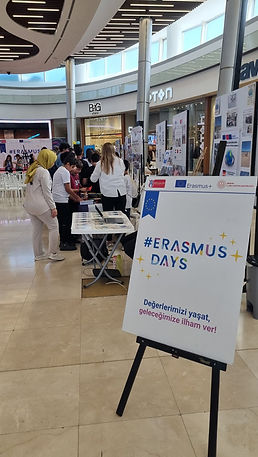
The Climate Smart Agriculture (CSA) project proudly joined the international celebration of ErasmusDays 2025, a week dedicated to showcasing the achievements and impact of Erasmus+ across Europe. Between 13 and 18 October 2025, all four project partners — MFR Lesneven (France), DEULA-Nienburg (Germany), Fatma Aliye Vocational and Technical High School (Turkey), and the Vocational High School of Agriculture “Nikola Pushkarov” (Bulgaria) — organized a variety of local and school-based events to highlight how Erasmus+ contributes to building a greener and more sustainable future.
Under the shared theme “Climate Smart Agriculture with Erasmus+”, partners conducted interactive workshops, school exhibitions, and student-led presentations that showcased project materials and results from the first mobility in France. Activities focused on raising awareness of climate change, sustainable farming, and innovation in vocational education. Students and teachers discussed how European cooperation supports new methods in agriculture, such as AI-driven technologies, renewable energy use, and water-smart farming.
In France, MFR Lesneven hosted open-door sessions and shared success stories from the first CSA training, inviting local farmers and students to discover European opportunities in green agriculture. In Bulgaria, students from “Nikola Pushkarov” High School organized a creative Erasmus exhibition and collaborated with local media to promote the project’s goals. In Germany, DEULA-Nienburg published Erasmus-themed materials and engaged followers through social media awareness posts. Meanwhile, in Turkey, Fatma Aliye MTAL participated in the Mersin Erasmus Festival, organized under the coordination of the Mersin Provincial Directorate of National Education, where the CSA project was presented as one of the region’s flagship Erasmus+ initiatives.
The ErasmusDays campaign brought the project closer to local communities, strengthening its visibility and promoting the values of collaboration, sustainability, and innovation in VET. Partners used the week to engage with teachers, students, parents, and local stakeholders — demonstrating how international cooperation can inspire real environmental action at the local level.
🔗 Related publications and media coverage:
Through these joint efforts, the CSA consortium once again demonstrated how Erasmus+ empowers institutions to take action for climate resilience, environmental awareness, and future-oriented education across Europe.

.jpeg)

.jpeg)
.jpeg)
03
.jpeg)


Sustainable Water Management Activity Successfully Held in Germany
The second transnational activity of the Climate-Smart Agriculture (CSA) project, titled “Sustainable Water Management”, was successfully carried out between 10–14 November 2025 in Germany, hosted by DEULA-Nienburg GmbH. The activity brought together a total of 16 participants, with four educators from each partner country—France, Türkiye, Bulgaria, and Germany. This international gathering provided a valuable platform for knowledge exchange and collaboration in the field of climate-smart agriculture.
Throughout the five-day programme, participants engaged in a comprehensive learning process that combined theoretical sessions, practical applications, and field visits. The activity began with an introduction to sustainable water management and its critical role within climate-smart agriculture, along with discussions on global water scarcity and its impact on agricultural production. Participants were also prepared for their visit to Agritechnica, one of the world’s leading agricultural technology fairs.
A key highlight of the activity was the visit to Agritechnica in Hannover, where participants explored innovative irrigation systems, smart farming technologies, and advanced solutions for efficient water use in agriculture. This experience allowed participants to interact directly with industry experts, observe the latest technological developments, and gain insights into the future of sustainable farming practices.
In the following days, the training focused on advanced irrigation technologies, water quality management, and precision water use. Participants examined real-life case studies from across Europe and visited a local farm implementing modern irrigation systems. In addition, expert-led sessions addressed data-driven water management, including the use of sensors, soil moisture monitoring, and satellite technologies. A hands-on activity enabled participants to design decentralized water systems for model farms, strengthening their practical understanding.
The final day of the activity was dedicated to integrating sustainable water management practices into vocational education and training (VET). Participants worked collaboratively to develop action plans aimed at transferring their newly acquired knowledge into their own institutions. These plans will play a key role in ensuring the long-term impact of the activity at both educational and community levels.
This activity was primarily designed for agricultural teachers and trainers, who represent the main target group of the project. However, its impact extends beyond the direct participants. Through knowledge transfer, the outcomes of the activity will also benefit students, trainees, and local farmers, contributing to more sustainable agricultural practices in partner countries.
As a result of the training, participants significantly improved their understanding of efficient water management techniques and the role of precision irrigation in addressing climate change challenges such as drought and water scarcity. They also established valuable connections with experts and stakeholders in the field, strengthening international cooperation and creating opportunities for future collaboration.
Overall, the successful implementation of this activity represents an important step toward achieving the objectives of the CSA project. By enhancing the competencies of educators and promoting innovative, sustainable practices, the project continues to contribute to building a more climate-resilient agricultural sector across Europe.


04
Climate Smart Tools for Green Future Activity Successfully Completed
The third activity of the Climate-Smart Agriculture (CSA) project, titled “Climate Smart Tools for Green Future”, has been successfully completed under the coordination of Vocational High School of Agriculture Nikola Pushkarov in Bulgaria. Implemented between 1 December 2025 and 1 March 2026, this three-month activity focused on developing innovative tools to support the transfer of knowledge and good practices in climate-smart agriculture across partner countries.
Unlike previous transnational trainings, this activity was carried out simultaneously in each partner country—France, Türkiye, Bulgaria, and Germany—through a collaborative and research-based approach. The process actively involved students, teachers, and local farmers, making it one of the most participatory phases of the project.
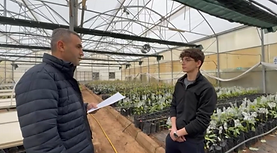
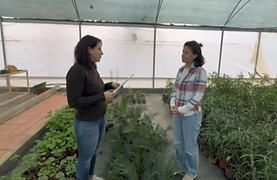
The first phase of the activity focused on needs assessment and research. During this stage, partners conducted extensive surveys, interviews, and field studies with key stakeholders, including agricultural teachers, students, and farmers. These efforts helped identify knowledge gaps in climate-smart agriculture and provided valuable insights into local challenges and practices. The findings from these studies created a strong foundation for the development of relevant and practical educational materials.
In the second phase, partners moved on to content development, working collaboratively to design a comprehensive CSA Sourcebook. This resource includes key topics such as climate change impacts on agriculture, mitigation strategies, sustainable farming practices, and local adaptation approaches. In addition, the content integrates modern concepts such as greenhouse gas reduction, resilience strategies, and AI & Agriculture 4.0 applications. To enrich the learning experience, partners also developed case studies, infographics, interactive exercises, and a series of podcasts focusing on real-life climate-smart agriculture practices.
The final phase focused on testing, evaluation, and finalization of the developed materials. The draft sourcebook was piloted with selected teachers and students, and their feedback was carefully collected and analyzed. Based on this feedback, the materials were revised and aligned with vocational education and training (VET) curricula. As part of the dissemination process, a conference titled “Climate Change and Agriculture” was organized, bringing together students, educators, and experts to discuss key issues and share knowledge. The conference was also broadcast live on social media, increasing its reach and impact.
As a result of this activity, a high-quality and practical CSA Sourcebook has been developed, alongside a range of complementary educational materials. These outputs are designed to support teachers, students, and agricultural stakeholders in understanding and applying climate-smart agriculture practices in real-life contexts. In addition, the activity significantly contributed to raising awareness and strengthening competencies in sustainable agriculture across all partner countries.
Throughout the activity, strong emphasis was placed on real-world engagement. Interviews and surveys conducted with farmers and local stakeholders ensured that the developed materials reflect actual needs and practical experiences from the field. This approach has enhanced the relevance and applicability of the project outputs.
All materials developed at this activity, including reports, interviews, and educational resources, are now publicly available on the project website under the “Outputs / Files / Downloads” section. In addition, videos, interviews, and other multimedia content produced during the activity can be accessed on the project’s official YouTube channel:
👉 https://www.youtube.com/@ErasmusClimateSmartAgriculture
Overall, the successful completion of this activity represents a major milestone for the CSA project. By combining research, collaboration, and innovation, the project continues to contribute to the development of modern, sustainable, and climate-resilient agricultural education systems across Europe.



04
News 4
...